

Blog
How Do Wooden Mechanical Models Work? A Guide to Gears and Movement

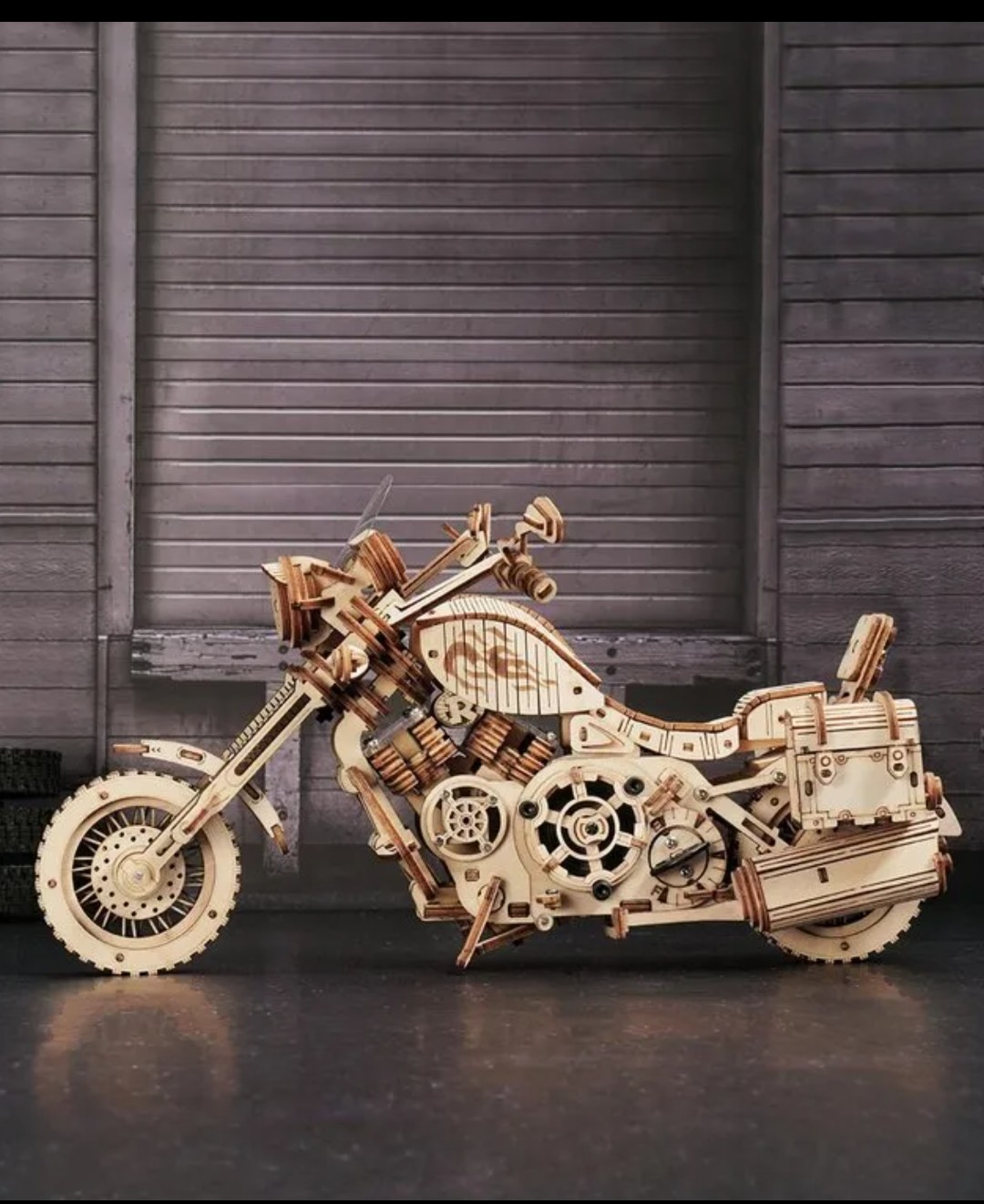
How Do Wooden Mechanical Models Work? A Guide to Gears and MovementHave you ever wondered how some wooden models can move, rotate or make different parts work together? Wooden mechanical models combine hands-on building with clever construction and the fascinating principles of mechanics.Unlike ordinary decorative objects, these models may contain gears, axles, levers and other moving components. Assembling them can help you understand how simple mechanical systems work in practice.BrainiWood offers wooden 3D puzzles and mechanical building models for people who enjoy hands-on projects, creative hobbies and technology.In this guide, we explore how wooden mechanical models work, what their different components do and what to consider when choosing a model.What is a wooden mechanical model?A wooden mechanical model is a construction kit assembled from individual parts that uses mechanical principles to create movement or perform a particular function.A model might represent a clock, vehicle, machine or another object inspired by the world of engineering. Some models are primarily decorative, while others contain moving components or several interconnected mechanisms.Many of these kits use wooden pieces that are assembled according to the manufacturer’s instructions. The builder’s task is to connect the parts correctly so the model works as intended.That is part of the appeal: instead of receiving a finished object, you create the complete structure yourself and can explore how it works.1. Gears: transferring movementGears are important components in many mechanical models.A gear is a rotating wheel with teeth around its edge. When two compatible gears mesh, turning one can cause the other to rotate as well.Gears can change the direction of rotation and the rotational speed. Depending on the gear ratio, they can also change the torque, which describes the turning effect of a force.For example, one gear may rotate a second gear, which then drives another component. This allows movement to travel through the mechanism.Why does this matter when building a model?Gears need to be positioned correctly and mesh properly. If a component is installed incorrectly, the mechanism may not move smoothly.Building a gear-based model is a practical way to discover how small details can affect the operation of an entire system.2. Axles and shafts: supporting and transferring movementAxles and shafts help support components and, in many designs, transmit rotational movement.For example, a gear may be attached to a shaft so that its rotation drives another mechanism. An axle may also support a rotating wheel or another component.Although these parts may look simple, their correct placement is important for the model to function properly.If a shaft is misaligned or components are fitted too tightly, movement may become restricted. That is why it is useful to follow the instructions carefully and check each stage before adding the next part.3. Levers and linkages: creating different types of movementNot all mechanical models rely solely on gears.Some designs use levers and connecting links to transform one type of movement into another. For example, rotary motion can be converted into a back-and-forth movement.Similar principles are used in many real machines and devices.In a model, levers and linkages make it possible to create movements that would be more difficult to achieve using gears alone.When you examine a completed model, you may notice that moving one component affects several others. This is one of the most interesting features of mechanical construction.4. How does a building kit become a working model?Assembling a mechanical model takes patience and attention to detail. Every component has a role in the overall construction.It helps to work through the project in stages.1. Read the instructions. Learn which parts make up the model and the order in which they need to be installed.2. Prepare the components. Check that the necessary pieces are present and handle them according to the manufacturer’s guidance.3. Assemble each mechanism step by step. Make sure each stage is correct before moving on to the next.4. Check the movement. Where the instructions allow, verify that moving parts can move freely before closing or covering the mechanism.5. Complete the assembly. Use the instructions to check that the components are positioned correctly.Avoid forcing parts together. If a component does not fit, check its orientation and review the instructions before continuing.5. What can you learn by building mechanical models?Assembling a mechanical model is more than a way to spend your free time. It can also help you understand several technical concepts.Cause and effect: how the movement of one component influences others.Spatial reasoning: how a three-dimensional structure fits together.Precision: why correct component placement matters.Problem-solving: how to investigate why a mechanism is not working as expected.Basic mechanics: how gears, axles and levers transfer movement.This type of activity may interest both adults and older children, provided the model’s recommended age and difficulty level are appropriate.6. How to choose the right wooden mechanical modelThe best choice depends on whether you want to focus on the building process, explore mechanical principles or display the finished model.For beginnersChoose a model that matches your experience and comes with clear instructions. Check the number of pieces and estimated assembly time.For technology enthusiastsA model with gears, axles and moving parts may offer more opportunities to explore how the construction works.For home décorIf you want to display the finished model on a shelf or desk, consider its dimensions and appearance as well.As a giftChoose a design that reflects the recipient’s interests. Clocks, vehicles and other mechanical constructions may appeal to someone who enjoys technical details and hands-on activities.When browsing BrainiWood, read the specific product description, features and recommended age before making your choice.7. What makes wooden mechanical models special?Part of the appeal of a mechanical model lies in both the building process and the finished result.During assembly, you create the structure yourself. Once completed, you can explore how the mechanisms work and display the model according to its intended features.Wood gives the construction a distinctive appearance, while the mechanical components make it more engaging than an ordinary decorative object.Every model is different, so choose one that offers the kind of building experience you will enjoy most.Frequently asked questionsDo wooden mechanical models actually move?Some models include moving components or mechanical functions, while others are mainly decorative. The exact features depend on the product.Do you need technical knowledge to assemble a mechanical model?Many building kits can be assembled by following the manufacturer’s instructions. The difficulty and skills required vary from model to model.Are gear-based models suitable for beginners?Yes, provided the difficulty level is appropriate for a beginner. Check the manufacturer’s recommendations and available assembly information before buying.Is a wooden mechanical model a good gift?It can be a thoughtful gift for someone who enjoys technology, building projects and creative hobbies. Choose a model that matches the recipient’s interests.Explore mechanical models at BrainiWoodIf you are curious about how gears, axles and moving parts work together, a wooden mechanical model could be an interesting next project.At BrainiWood, you can explore wooden 3D puzzles and mechanical building models that offer an engaging activity during assembly and an interesting result once completed.Choose a model that sparks your curiosity and discover how many small components can come together to create one complete structure.

 Eesti
Eesti Suomi
Suomi